Truck-Mounted Forklifts: A Disruptive Innovation and Future Prospects in the Logistics Industry
 |  |
In the context of the rapid development of modern logistics, driven by the booming e-commerce sector and the acceleration of global trade, mobile forklifts, as convenient handling equipment integrating "transportation + loading and unloading," have become a new focal point in the market. This is due to their ability to enhance operational efficiency and reduce labor-hour costs. This article will focus on the core values, market demands, and prospects of mobile forklifts, analyzing their applications and development in the logistics industry through specific scenarios.
I. Definition and Core Characteristics of Mobile Forklifts
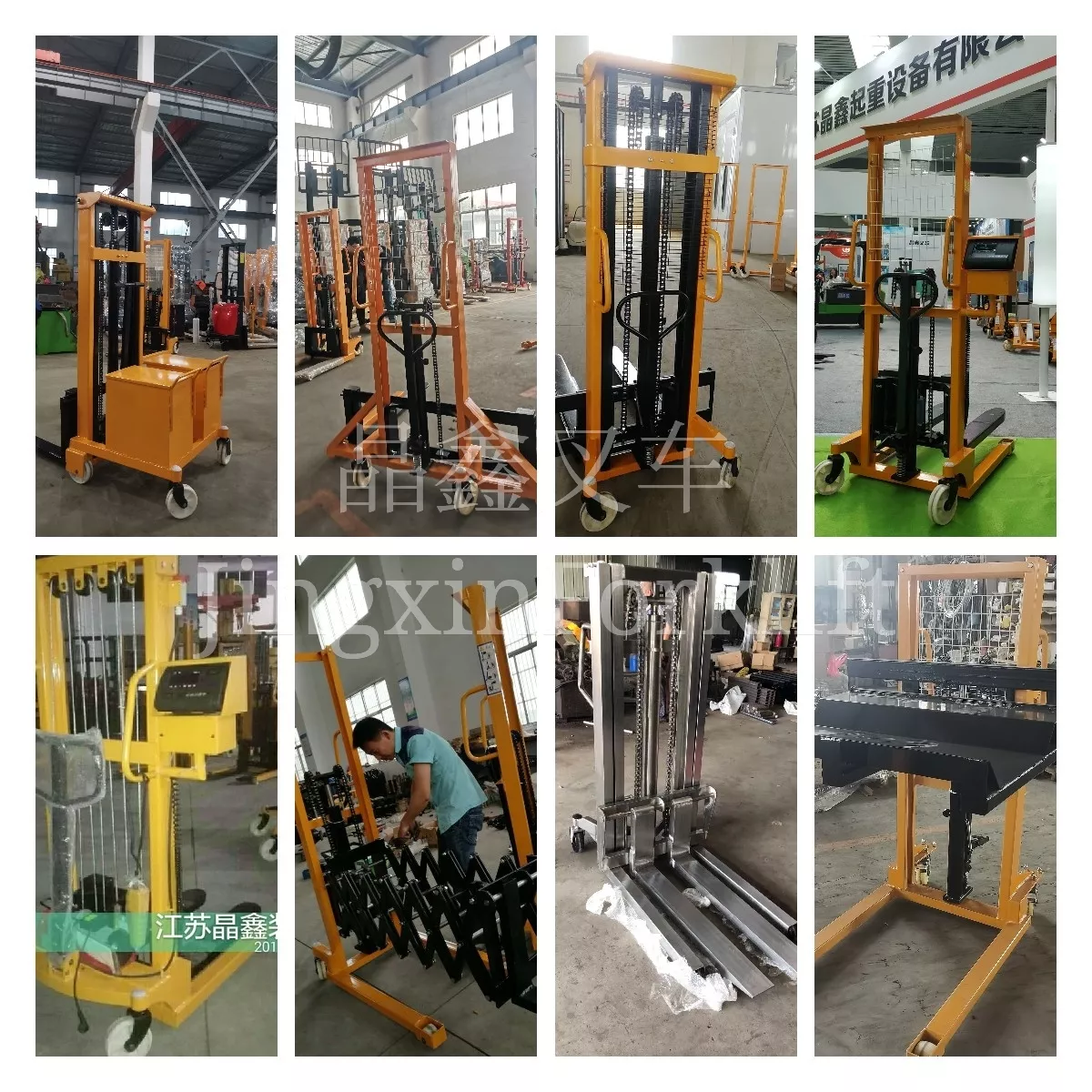
Mobile forklifts are equipment that can be carried along with vehicles and complete loading and unloading operations quickly at the destination. Compared with traditional forklifts, they have three core advantages:
High Flexibility: They are well-suited for distribution in densely populated urban areas, such as restocking community convenience stores and delivering furniture and appliances in old residential areas.
Compact Size: They can operate in confined spaces, like underground warehouses in shopping malls and small shops in narrow alleys.
Integrated Functions: They meet the core demand of modern logistics for "high efficiency and convenience" by integrating transportation and loading/unloading functions. For example, in fresh food distribution, they enable seamless loading and unloading from transport vehicles to supermarket refrigerators.
II. Three Major Driving Factors for Market Demand Growth
1. Demand Driven by the E-commerce Industry
The explosive growth of e-commerce has spurred a demand for "fast delivery," especially with the rise of instant retail models like "minute-delivery" and "hour-delivery." In community e-commerce distribution scenarios, mobile forklifts can follow delivery vehicles directly to the楼下 (downstairs of residential buildings). They can quickly load and unload commodities such as rice, flour, oil, fruits, and vegetables onto the trolleys of delivery personnel or the shelves of community self-pickup points. This avoids the time-consuming process of first transporting goods to regional warehouses and then reloading them for secondary distribution. Their efficient loading and unloading capabilities perfectly match short-term logistics solutions and make them key equipment for fulfilling orders.
2. Catalyzed by Urban Distribution Pressures
The acceleration of urbanization and population growth have exacerbated urban distribution challenges. In distribution scenarios within urban core business districts, narrow roads and limited parking spaces make it difficult for traditional large forklifts to enter. Mobile forklifts can flexibly navigate through business district alleys with delivery vehicles, completing cargo loading and unloading for merchants such as clothing stores and restaurants. For example, before the peak dining hours, delivery vehicles equipped with mobile forklifts can arrive at business districts and quickly unload ingredients from the vehicles to the restaurant kitchens, effectively alleviating distribution bottlenecks and improving end-of-line logistics efficiency.
3. Demand from Traditional Industry Transformation
The state supports the upgrading of traditional manufacturing and retail industries, and enterprises are placing greater emphasis on logistics efficiency. In distribution scenarios within and around traditional manufacturing factories, such as in automotive parts manufacturing enterprises, parts need to be transported from raw material warehouses to production lines and finished products to finished product warehouses. Mobile forklifts can follow transport vehicles directly and flexibly load and unload goods between factory workshops and between workshops and warehouses. This eliminates the need to rely on fixed large forklift equipment and reduces the waiting time for cargo transfer, making them the preferred equipment for logistics innovation.
III. Four Core Advantages of Mobile Forklifts
1. Significant Efficiency Improvement
In fresh food cold chain logistics scenarios, goods are sensitive to temperature and require minimizing loading and unloading time. Mobile forklifts can complete loading and unloading quickly throughout the entire transportation process. From cold chain transport vehicles to supermarket refrigerators, it takes only a few minutes to unload a batch of goods. Compared with manual handling, they save more than 50% of the time and are far more efficient than manual handling and traditional large forklifts, effectively ensuring the freshness of fresh food products.
2. Obvious Cost Reduction
In small and medium-sized e-commerce warehousing and distribution centers, the traditional model requires hiring multiple porters to cooperate with large forklifts. Mobile forklifts can reduce enterprises' reliance on labor. One mobile forklift only needs one operator to complete the handling workload that would otherwise require 2 - 3 workers. At the same time, they are in line with the current trend of rising labor costs. By optimizing processes, they further enhance production efficiency and help enterprises save tens of thousands of yuan in labor costs annually.
3. Wide Scenario Adaptability
Urban Distribution Scenarios: In addition to community e-commerce and business district distribution, in furniture and appliance distribution scenarios, when facing old residential areas without elevators, mobile forklifts can first unload furniture and appliances from transport vehicles to the ground of the residential area and then cooperate with small hoisting equipment to transport the goods to residents' homes, solving the "last-mile" loading and unloading problems.
Warehouse Management Scenarios: In small third-party warehousing enterprises with limited warehouse space, traditional large forklifts have difficulties in turning and operating. Mobile forklifts can flexibly navigate through narrow aisle channels between shelves, completing tasks such as goods shelving, unshelving, and intra-warehouse transfer.
Construction Site Handling Scenarios: On small construction sites, building materials such as sand, cement, and steel bars need to be unloaded from transport vehicles to the construction area. Mobile forklifts can adapt to the rugged ground conditions on construction sites, complete loading and unloading quickly, and do not require specially built forklift roads, reducing construction site costs.
4. Green and Compliant
In logistics operation scenarios in core urban areas, such as material distribution around schools and hospitals, there are strict requirements for noise and environmental pollution. Most mobile forklifts are electrically driven, with noise levels below 60 decibels during operation and no tailpipe emissions. This complies with the development trend of green logistics and meets urban environmental protection regulations, avoiding operational restrictions due to environmental issues.
IV. Core Challenges and Response Directions
1. Insufficient Technical Standardization
Currently, there are differences in interfaces, operating systems, and component specifications among mobile forklifts of different brands. In scenarios where multiple brands of equipment operate collaboratively, such as in regional distribution centers of large chain supermarkets where multiple brands of mobile forklifts are used simultaneously, equipment cannot share data, and components are not interchangeable. This increases the difficulty of equipment maintenance and management. The industry needs to promote the formulation and implementation of technical standards to unify equipment interfaces, operating specifications, and component specifications, improve equipment interoperability, and reduce the usage costs of enterprises for multiple brands of equipment.
2. Intensified Market Competition
As the market demand for mobile forklifts grows, more and more enterprises are entering this field, leading to intensified market competition. In the procurement scenarios of small and medium-sized logistics enterprises, enterprises are more concerned about product cost-effectiveness and service quality. Related enterprises need to upgrade their technologies, such as developing more energy-efficient mobile forklifts with stronger load-bearing capacities, and optimize user experiences, such as providing regular equipment inspections and 24-hour fault repair services, to build core competitiveness and attract customers.
3. Training Gaps for Users
Although mobile forklifts are relatively easy to operate, in special operating scenarios, such as high-altitude loading and unloading (loading and unloading heights exceeding 3 meters) and nighttime low-temperature operations (ambient temperatures below -10°C), high skills are required for operators. If operators do not receive professional training, operational errors are likely to occur, leading to equipment failures or safety accidents. Enterprises need to increase training investments, develop specialized training courses for different scenarios, such as simulated high-altitude loading and unloading and low-temperature operations for practical training, to improve operators' skills and safety awareness.
V. Market Prospect Outlook
According to market research agency predictions, the demand for mobile forklifts will grow at an average annual rate of over 20% in the coming years. With technological iterations, their intelligence level will significantly improve. For example, equipped with the Internet of Things (IoT) technology, they can monitor equipment operation status and locate equipment positions in real-time. In intelligent scheduling scenarios in large logistics parks, managers can reasonably allocate mobile forklift operation tasks through the system to improve equipment utilization. The addition of automatic obstacle avoidance functions can enable them to automatically avoid pedestrians and obstacles in personnel-dense distribution scenarios (such as around shopping malls and scenic spots), enhancing operational safety.
In the future, mobile forklifts will have more complete functions. They will not only become core tools for enterprises to improve logistics efficiency but also drive the entire logistics industry towards intelligence and digital transformation. For example, in smart community logistics scenarios, mobile forklifts can collaborate with community smart self-pickup cabinets and unmanned delivery vehicles to achieve full-process automation of goods from transport vehicles to residents' hands. For enterprises, early layout of mobile forklift applications will lay a solid foundation for future market competition.
Conclusion
With advantages such as efficiency improvement, cost reduction, and wide scenario adaptability, mobile forklifts play an important role in many scenarios, including community e-commerce, urban business district distribution, small factory logistics, and construction site handling. They have become a new growth point in the logistics industry. Despite facing challenges such as technical standards and market competition, supported by the continuously expanding market demand, their market prospects are broad. In the future, they will become an indispensable and important component of the logistics industry, helping enterprises stand out in the competition.


 10Custom case
 21Company's View
 10Certificate
 14Paper/Printing Factories
 5Stainless steel material handling equipment



