In modern logistics and warehousing industries, electric stackers have become indispensable equipment for enterprises due to their efficiency and convenience. During long-term use, it is inevitable for battery performance to decline, making timely battery replacement crucial. However, many users may encounter various issues during replacement, affecting the equipment's normal operation. This article details methods for quickly replacing batteries in electric stackers and shares practical tips from professional maintenance technicians to help you master the process.
Before learning how to replace a battery, it is essential to understand the battery types used in electric stackers. Generally, they mainly use lead-acid batteries and lithium batteries.
Lead-acid batteries are the most common type in traditional electric stackers, known for their simple structure and low cost. However, they have a low energy density and require regular maintenance, such as adding electrolyte. Additionally, their service life is relatively short, typically 3–5 years.
In recent years, lithium batteries have gained widespread application in electric stackers due to their light weight, high energy density, and long life. They require minimal maintenance, charge quickly, and can support over 2,000 charging cycles, making them the preferred choice for many enterprises. However, lithium batteries come with a higher cost, so selection should be based on the enterprise’s actual needs.
Before starting the replacement, prepare basic tools and materials to ensure smooth operation.
Wrenches (suitable for battery connection terminals)
Screwdrivers (for removing battery covers and other components)
Gloves (to protect hands)
Safety goggles (to protect eyes from accidental injuries)
Detergent (for cleaning battery contact points)
Ensure the equipment is turned off and unplugged from the power source before replacing the battery. Always wear gloves and safety goggles during the operation to ensure safety.
Below is a detailed guide to disassembling and replacing batteries in electric stackers.
Ensure the surrounding environment is dry and clear the workbench of any debris to maintain a tidy operation space.
First, ensure the electric stacker is completely shut down. Then, unplug the equipment to disconnect the power source.
Use a screwdriver to remove the screws from the battery compartment cover, and gently open the compartment to prepare for subsequent steps. When opening the cover, check for obvious corrosion or other damage.
Loosen the nuts of the battery connection terminals with a wrench, following the order of disconnecting the negative terminal (black) first, then the positive terminal (red). After removal, carefully take out the old battery. If needed, use additional tools to assist in moving the old battery.
Place the new battery into the compartment, ensuring it is positioned correctly. Then, connect the positive terminal first, followed by the negative terminal, and tighten the nuts to ensure good contact.
Use detergent to clean the battery contact points to ensure good electrical conductivity between the battery and the electric stacker. Allow the points to dry after cleaning.
Put the battery compartment cover back in place and use a screwdriver to tighten all screws, ensuring the cover is sealed to prevent foreign objects from entering.
Finally, reconnect the power plug, start the electric stacker, and observe its operation to confirm the replacement was successful.
Here are some tips from professional technicians to help you replace batteries more efficiently:
Regularly detecting battery status can help predict replacement needs in advance, avoiding work disruptions due to sudden battery failure. You can judge battery health by observing voltage, charging time, and usage frequency.
It is recommended to record the battery’s usage time, especially under high-frequency use. Tracking usage time helps you more intuitively determine the optimal replacement timing.
With numerous battery brands on the market, opt for products from well-known brands when selecting a new battery to ensure quality and after-sales service.
Store batteries in a dry, cool environment to avoid performance degradation caused by high temperatures or humidity. When the stacker is not in use, disconnect the battery and check its charge regularly.
Replacing the battery in an electric stacker is not a complex task. By mastering the correct methods and tips, you can easily handle it. Regular maintenance, inspection, proper use, and storage can effectively extend battery life and ensure the electric stacker operates normally. We hope this article helps you achieve twice the result with half the effort in battery replacement and prepares you to tackle equipment needs with confidence.
Key Features of the Translation:
Maintains the original technical terminology (e.g., "lead-acid batteries," "energy density," "charging cycles").
Adheres to the structure of headings, subheadings, and lists for clarity.
Emphasizes safety precautions and operational steps in professional technical writing style.
Ensures fluency and accuracy for readers in logistics, warehousing, or maintenance fields.


 10Custom case
 21Company's View
 10Certificate
 14Paper/Printing Factories
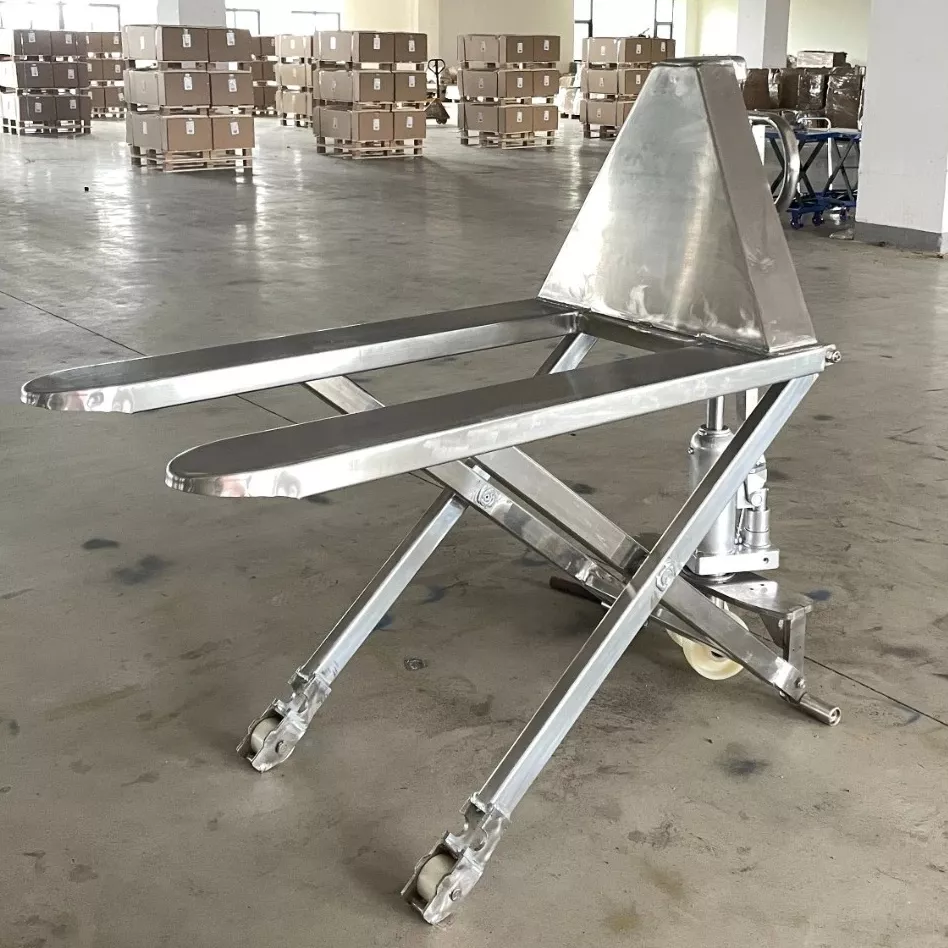 5Stainless steel material handling equipment



