In the modern warehousing and logistics industry, efficiency and safety are key factors in measuring a company's competitiveness. In this regard, the emergence of semi-electric stackers is undoubtedly a major breakthrough. This article will deeply explore the high-efficiency advantages of semi-electric stackers, including their working principles, application fields, comparison with traditional equipment, and how to further enhance work efficiency through intelligent technologies. By understanding these aspects, enterprises can better select suitable equipment and optimize their operation management.
What is a semi-electric stacker?
A semi-electric stacker, also known as a semi-
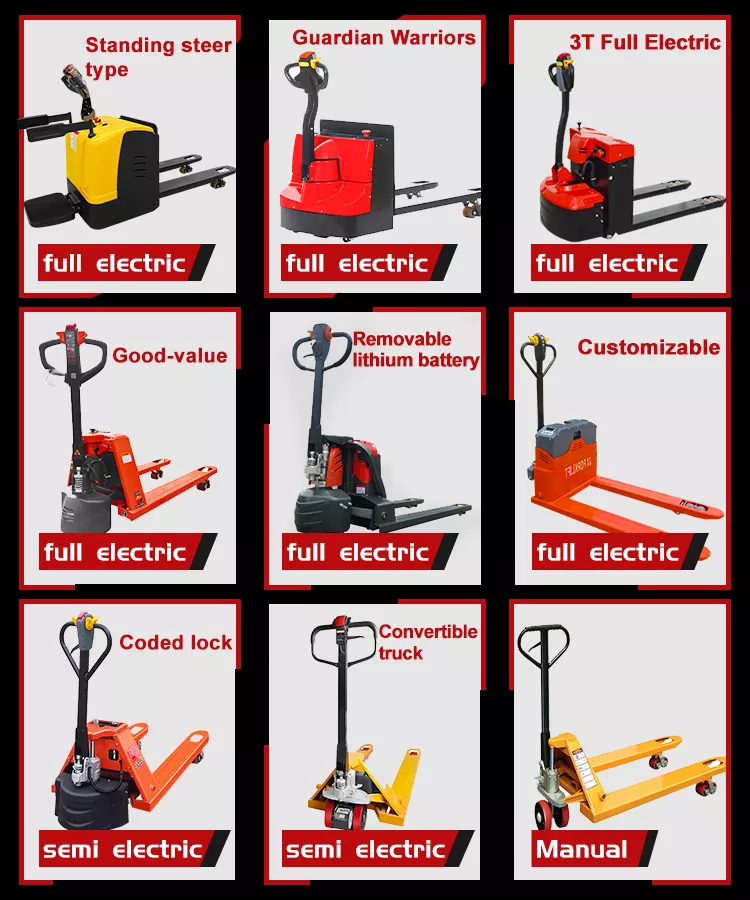
electric forklift, is mainly used for material handling and stacking operations within warehouses and factories. Compared with
manual stackers, semi-electric stackers use electric power assistance to reduce the physical burden on operators. Operators can easily complete lifting, forward and backward operations through simple control levers and buttons, greatly improving work efficiency.
This equipment is usually equipped with an electric lifting system, which can effectively lift goods to a certain height, facilitating storage and retrieval. Compared with traditional manual equipment, it not only reduces the dependence on labor force but also reduces labor intensity and improves operational safety.
The working principle of a semi-electric stacker
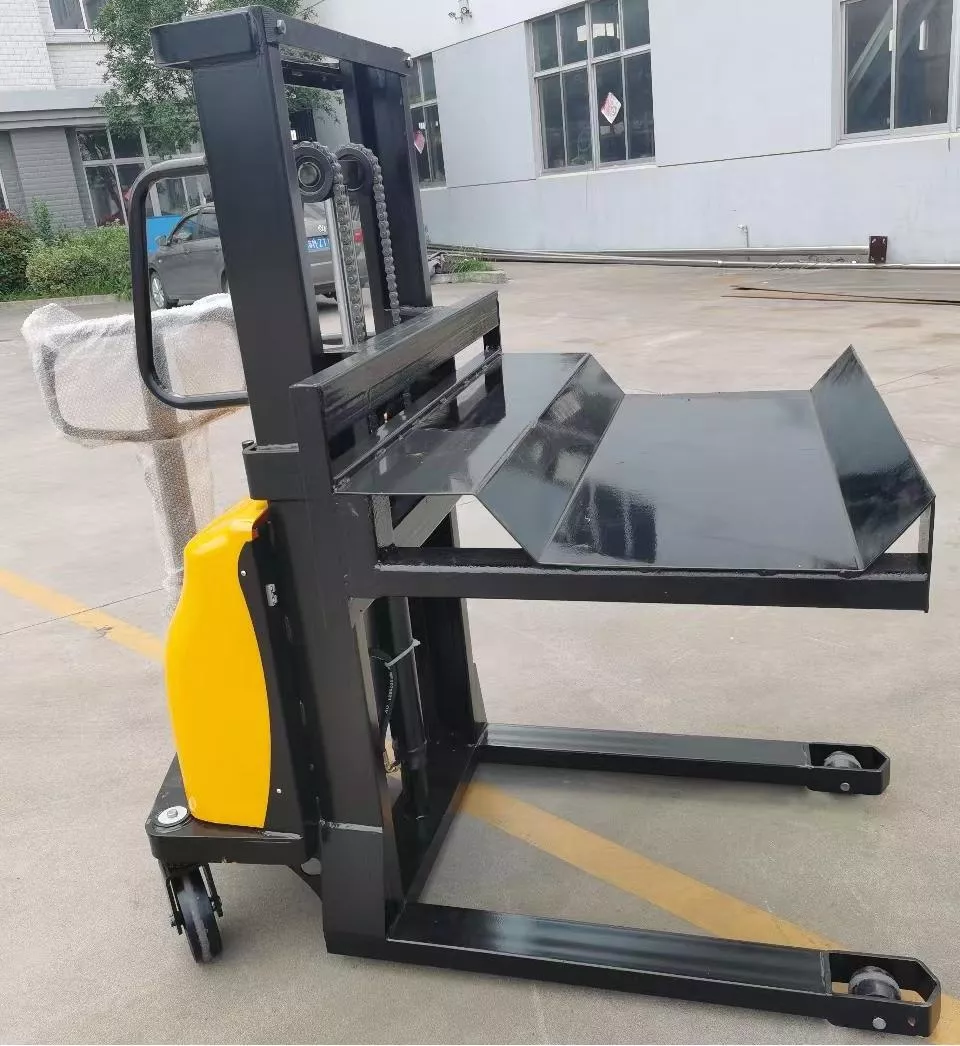
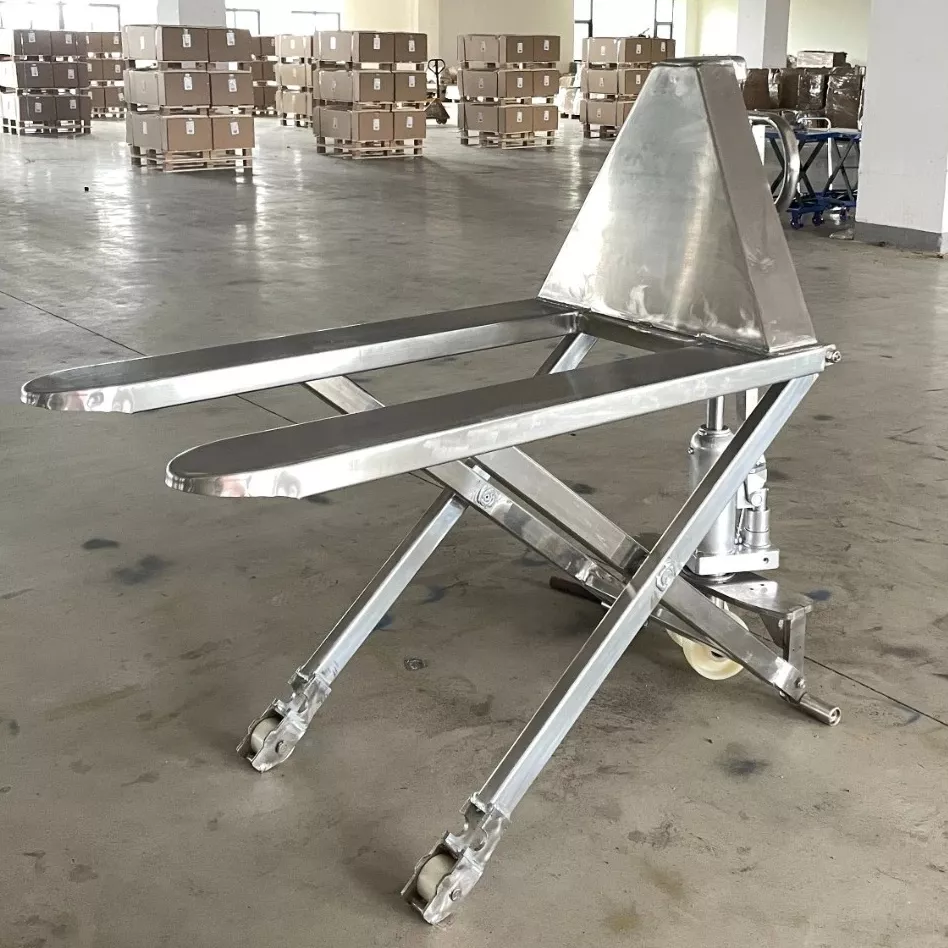
The working principle of a semi-electric stacker is relatively simple. Its main structure includes the vehicle body, fork arms, electric lifting system, driving wheels, and control system. During operation, the operator needs to load the goods onto the fork arms, and then use the control system to start the electric lifting mechanism to lift the goods to the required height. At the same time, the driving wheels are driven by an electric motor, enabling the stacker to move smoothly.
Electric lifting system: Controls the lifting speed and height through an electric motor to meet the needs of different goods and working environments.
Driving system: Can be adjusted according to the weight of the load to ensure that the equipment can operate normally under different loads.
Control system: Modern semi-electric stackers are usually equipped with intelligent control systems, which can achieve more precise operations, such as cargo positioning, overload alarm and other functions.
Application fields of semi-electric stackers
Semi-electric stackers have a wide range of applications in multiple industries. The main application fields include:
Warehousing and logistics: In warehouses, semi-electric stackers can quickly handle and stack goods, improving the turnover efficiency of warehousing operations.
Manufacturing industry: In production lines and workshops, stackers are used for the handling of raw materials and the stacking of finished products, ensuring the smooth progress of the production process.
Retail industry: In supermarkets and shopping malls, stackers are also used for the incoming and replenishment of goods, enhancing the shopping experience of customers.
Construction sites: On construction sites, semi-electric stackers provide great convenience for the handling of heavy materials, reducing the risks of manual handling.
The high-efficiency advantages of semi-electric stackers
Improving work efficiency
Semi-electric stackers are driven by electricity, greatly reducing the need for manual force. They can complete a large number of handling and stacking operations in a short time. This means that operators can handle more goods in the same period, improving the overall work efficiency.
Reducing labor intensity
In traditional manual stacker operations, operators need to consume a large amount of physical strength. Semi-electric stackers, through the electric lifting system and assisted driving technology, significantly reduce the labor intensity of operators. This equipment can help employees avoid long-term physical labor, thereby reducing the occurrence of occupational diseases and improving job satisfaction.
Enhancing safety
Safety is a crucial consideration in the warehousing and logistics industry. Semi-electric stackers fully consider safety factors in their design, such as equipping with protection devices, starting safety locks and other functions to ensure that the equipment will not have accidents during operation. At the same time, its low center of gravity design reduces the risk of tipping, making operators more at ease during operation.
Versatility and adaptability
Modern semi-electric stackers usually have strong adaptability. Different from traditional forklifts that are only suitable for specific ground environments, semi-electric stackers can move flexibly in narrow passages, rugged ground and ramps, meeting various operation requirements and being suitable for a variety of working environments.
How to choose a suitable semi-electric stacker?
When choosing a suitable semi-electric stacker, multiple aspects need to be considered:
Load capacity: According to the actual work requirements, select a suitable load capacity to ensure that the equipment can stably and safely carry goods during operation.
Lifting height: According to the operation requirements, select an appropriate lifting height to avoid affecting work efficiency due to insufficient height.
Battery life: The battery life of an electric stacker is an important factor affecting its use efficiency. Therefore, when choosing, focus on the battery capacity and charging speed.
Usage environment: Different usage environments (such as wet and dusty places) may affect the selection of equipment. Appropriate materials and structures need to be selected to ensure the durability of the equipment.
After-sales service and maintenance: High-quality after-sales service can effectively reduce the losses caused by equipment failures. Therefore, when choosing a brand, consider the service capabilities of the manufacturer.
Future development trends
With the continuous progress of technology, the future of semi-electric stackers will present the following development trends:
Intelligence: Future semi-electric stackers will be equipped with more intelligent functions, such as automatic navigation, intelligent obstacle avoidance, remote monitoring, etc., making the operation more convenient and safe.
Environmental protection and energy conservation: In the design of electric stackers, more attention will be paid to environmental protection and energy conservation in the future. New types of batteries and driving technologies will be adopted to reduce energy consumption.
Integration with the Internet of Things: With the help of Internet of Things technology, semi-electric stackers will be able to achieve real-time data transmission and intelligent scheduling, making logistics management more efficient.
Conclusion
As an important part of modern warehousing and logistics equipment, semi-electric stackers, through their efficient working mechanisms and wide application scenarios, have become a powerful tool for enterprises to improve operational efficiency. When selecting suitable equipment, all aspects such as load capacity and intelligent functions should be comprehensively considered to provide a solid guarantee for the development of enterprises.
Whether it is to improve work efficiency, reduce labor intensity, or enhance safety, semi-electric stackers are constantly changing the pattern of the traditional logistics industry. Facing the rapidly developing market, enterprises should seize this opportunity to enhance their competitiveness and move towards greater achievements.


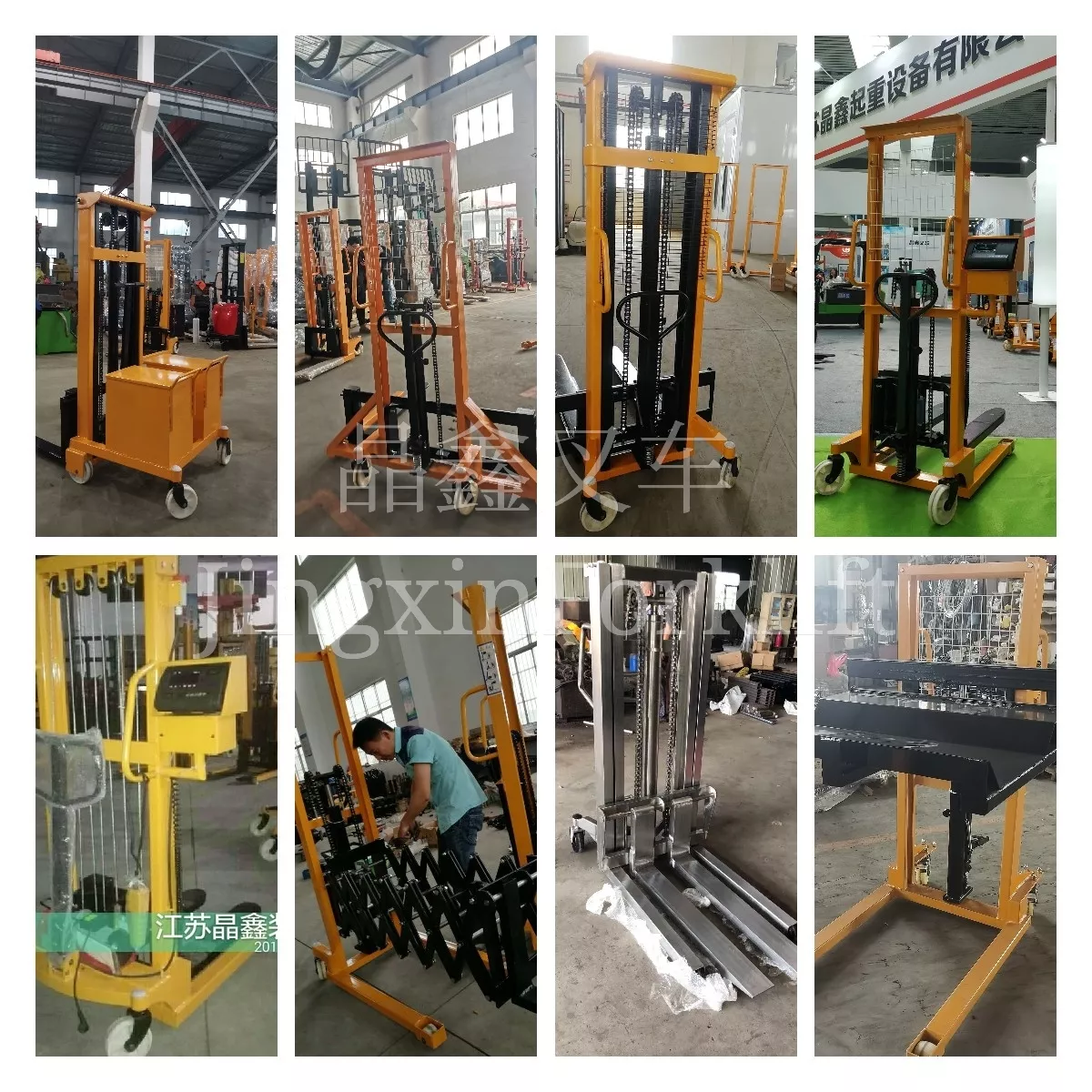 10Custom case
 21Company's View
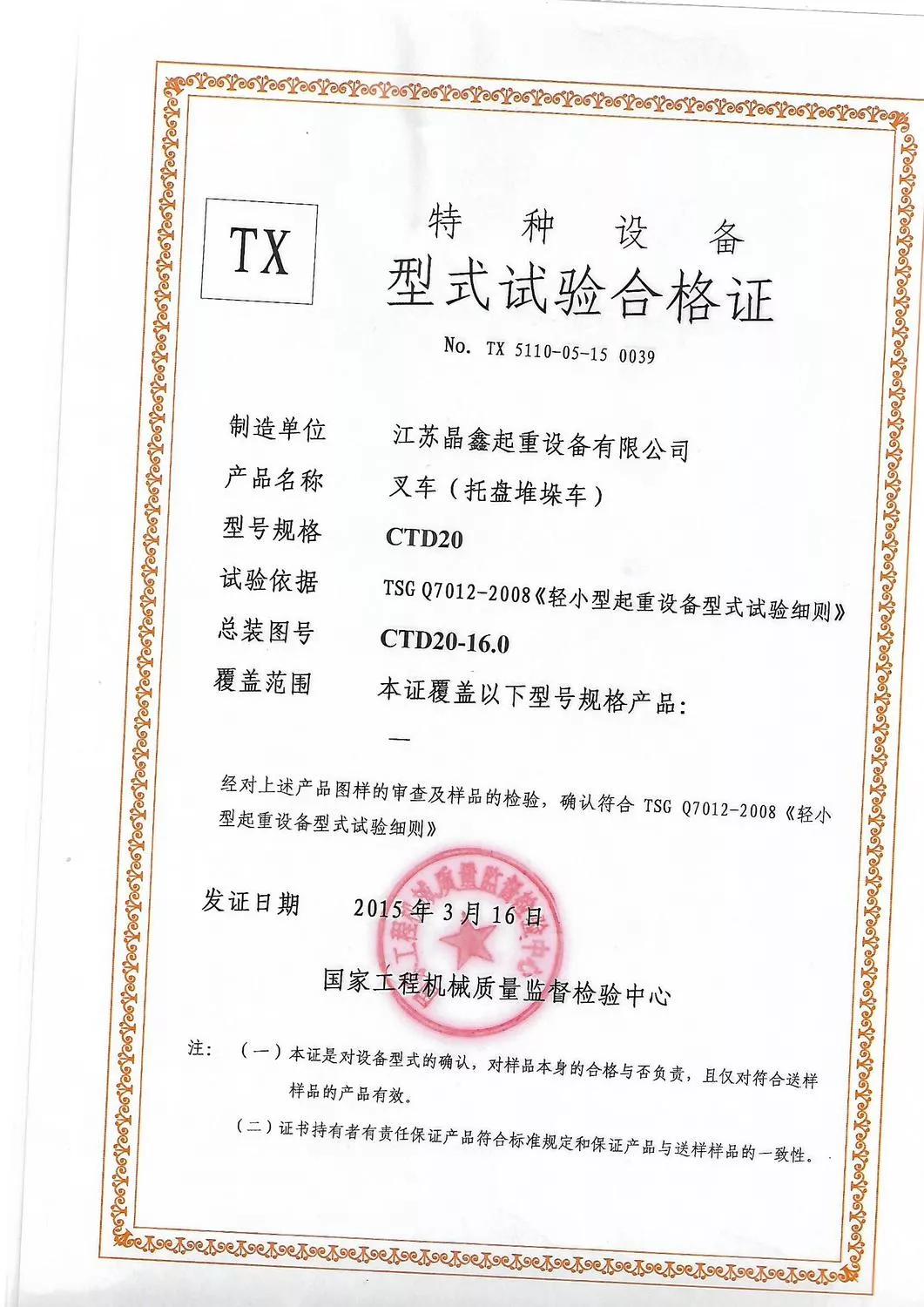 10Certificate
 14Paper/Printing Factories
 5Stainless steel material handling equipment



